Urgent Need for Constitutional Review in the United States of America
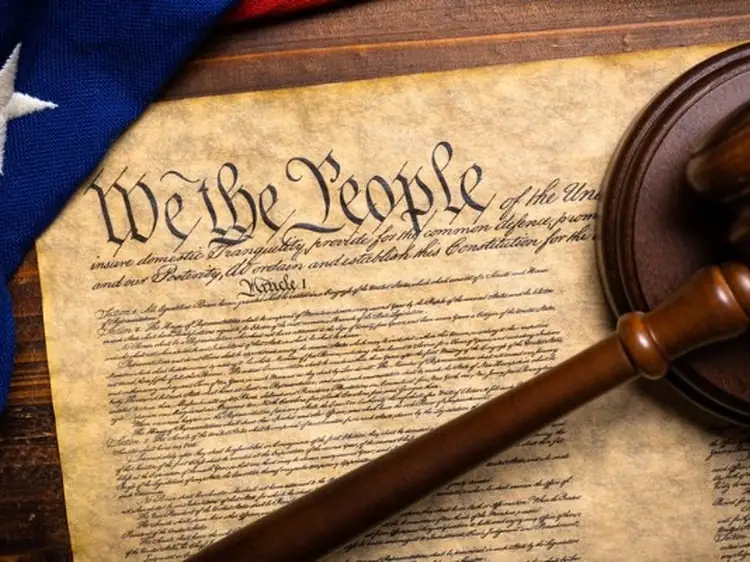
In an era marked by exponential technological, social, and economic change, the framework upon which the United States was built is straining under the weight of modern challenges. The U.S. Constitution, drafted over two centuries ago in an entirely different historical context, remains the bedrock of American governance. Yet when the founding document was written, the country faced issues—geopolitical uncertainty, limited technological progress, and a predominantly agrarian society—that are vastly different from the complexities of today. While the amendment process was designed to allow for measured evolution, its piecemeal nature now risks leaving a once-radical document woefully out of sync with contemporary demands.
The core of the problem lies in the mismatch between a document forged in the 18th century and the challenges of the 21st. Our world is now dominated by rapid technological innovation, global economic interdependence, and multifaceted social movements that stretch the capacities of existing legal and governmental structures. Issues that were unimaginable to the framers—such as digital privacy, cyber security, environmental crises, and the sprawling influence of multinational corporations—cannot be adequately addressed by isolated amendments. Instead, these conditions call for a comprehensive re-evaluation of our constitutional foundations, orchestrated not merely through stopgap fixes but through a full-scale review that reimagines governance for the modern.
The amendment process, intentionally difficult to ensure stability and prevent capricious change, has historically acted as a safeguard against sudden ideological shifts. However, this rigorous threshold also means that many adjustments are ill-suited to the pace at which global challenges and domestic realities evolve. While judicial review—an essential mechanism for interpreting constitutional intent—has provided a check on governmental overreach, it too is hamstrung by the limitations of outdated language and assumptions embedded in the original.
Relying on centuries-old phrasing to adjudicate issues of a digital and interconnected world can lead to inconsistencies and a patchwork of rulings that undermine coherent public policy.
Strikingly, phenomena such as recurring government shutdowns, contentious battles over the debt ceiling, and chronic political gridlock are symptomatic of deeper structural flaws. These dilemmas are not simply the result of partisan bickering but are symptomatic of a constitutional model that struggles to accommodate the dynamic priorities of a 21st-century democracy. Proponents of constitutional reform argue that if state legislatures have repeatedly convened to redraft state constitutions in light of changing realities, then it is high time the national framework undergoes a similar transformation. True reform would not discard the enduring principles of liberty and justice held dear by previous generations; rather, it would update the modes of their realization in a world that demands agility and inclusiveness.
A full constitutional review would offer the opportunity to reframe foundational principles in light of modern values and global realities. Rather than relying on isolated amendments that treat individual symptoms, a comprehensive update would allow for a systematic reordering of governance structures—addressing issues as diverse as electoral reform, socioeconomic inequality, environmental stewardship, and digital rights. This is not an effort to undermine tradition; it is a practical and necessary response to the evolving challenges of our time. Maintaining a document that is continuously forced to serve dual roles—as both an immutable relic of a bygone era and as the live blueprint for modern policy—puts our democratic ideals at risk.
Critics might contend that preserving the original text maintains a connection to the historical struggles and triumphs that have defined the nation. However, the inherent risk is that clinging to a framework unsuited to current realities may eventually erode the very freedoms it was meant to protect. A bold re-examination of our constitutional standards would serve as an investment in the nation’s future—a future where documented rights and governmental responsibilities resonate with and reflect the lived experiences of all citizens in a rapidly evolving society.
Ultimately, the urgent need for constitutional review is a call to action: a recognition that legal structures must evolve alongside the society they govern. By embracing a comprehensive overhaul rather than a series of disconnected amendments, America would reaffirm its commitment to being a vibrant, adaptive democracy—one that not only honors its historical roots but also cultivates the promise of a more equitable, responsive future.